Elevate Your Space: Infusing Spiritual Serenity with Mandala Designs
In today's fast-paced world, creating a sanctuary within your home has become more important than ever. The spaces we inhabit directly influence our mental well-being, emotional stability, and spiritual growth. One of the most effective ways to transform your environment into a haven of peace and tranquility is through the incorporation of mandala designs. These ancient, sacred geometric patterns have been used for centuries across various cultures to promote healing, meditation, and spiritual awakening. At BensonCastillo, we understand the profound impact that thoughtfully curated décor can have on your daily life, and we're here to guide you through the journey of infusing spiritual serenity into your personal spaces.
Understanding Mandalas: Ancient Wisdom Meets Modern Living
Mandalas are far more than decorative elements. The word "mandala" comes from Sanskrit, meaning "circle" or "completion." These intricate circular designs represent wholeness, unity, and the infinite nature of the universe. Originating in Hindu and Buddhist traditions, mandalas have been used as tools for meditation, spiritual practice, and healing for thousands of years. Each element within a mandala carries symbolic meaning, from the center point representing the divine spark within all beings to the outer layers symbolizing the material world and our connection to it.
The beauty of mandalas lies in their universal appeal and adaptability. Whether you're drawn to them for their spiritual significance or simply appreciate their aesthetic beauty, incorporating mandala designs into your space creates an immediate sense of harmony and balance. The symmetrical nature of these patterns naturally calms the mind, as our brains are naturally attracted to order and symmetry. This psychological response, combined with the spiritual intentions behind mandala creation, makes these designs incredibly powerful tools for environmental transformation.
The Psychology of Sacred Geometry in Home Design
Sacred geometry refers to the belief that certain proportions, patterns, and shapes hold spiritual significance and can influence human consciousness. Mandalas are prime examples of sacred geometry in action. When you surround yourself with these patterns, you're engaging with mathematical principles that have been recognized across cultures as inherently harmonious and balanced.
Research in environmental psychology has shown that our surroundings significantly impact our stress levels, creativity, and overall well-being. Spaces filled with chaotic, random patterns tend to increase anxiety and mental fatigue, while environments featuring organized, symmetrical designs promote relaxation and mental clarity. Mandala designs, with their perfect symmetry and intricate patterns, create visual harmony that your brain finds deeply satisfying. This satisfaction translates into reduced stress, improved focus, and a greater sense of inner peace.
The repetitive nature of mandala patterns also engages what psychologists call "soft fascination." This is a state where your attention is gently held by something interesting but not demanding, allowing your mind to relax while remaining engaged. This state is ideal for meditation, creative thinking, and emotional processing. By incorporating mandalas into your living spaces, you're essentially creating an environment that naturally supports these beneficial mental states.
Choosing the Right Mandala Designs for Your Space
Not all mandalas are created equal, and selecting the right designs for your specific space requires thoughtful consideration. Different mandala patterns carry different energetic qualities and symbolic meanings, so understanding these distinctions will help you create a space that truly resonates with your intentions.
Color Symbolism in Mandala Design
Color plays a crucial role in mandala design and its energetic impact. Each color carries its own vibrational frequency and symbolic meaning. Red mandalas are associated with passion, energy, and grounding, making them ideal for spaces where you want to feel more vibrant and alive. Orange mandalas promote creativity, joy, and social connection, perfect for living rooms and creative spaces. Yellow mandalas enhance mental clarity, optimism, and intellectual stimulation, making them excellent for home offices and study areas.
Green mandalas represent healing, growth, and renewal, ideal for bedrooms and spaces dedicated to rest and recovery. Blue mandalas promote calm, communication, and spiritual awareness, perfect for meditation rooms and spaces where you want to encourage peaceful reflection. Purple mandalas are associated with spiritual transformation, intuition, and higher consciousness, making them wonderful for meditation spaces and spiritual practice areas. White or silver mandalas represent purity, clarity, and divine connection, while black mandalas ground energy and provide protection.
When selecting mandala designs for your space, consider both the room's function and your personal color preferences. A bedroom might benefit from calming blues and greens, while a creative workspace might thrive with energizing oranges and yellows. Your intuitive response to a particular mandala is also important—if you're drawn to a specific design, that attraction itself is meaningful and worth honoring.
Mandala Patterns and Their Meanings
Beyond color, the specific patterns within a mandala carry symbolic significance. Mandalas with lotus flowers at their center represent spiritual awakening and enlightenment, as the lotus is a sacred symbol in many Eastern traditions. Mandalas featuring geometric stars and points promote clarity, focus, and spiritual insight. Those with concentric circles emphasize unity, wholeness, and the cyclical nature of existence. Mandalas incorporating nature elements like flowers, leaves, and vines bring organic, nurturing energy to a space.
Understanding these symbolic meanings allows you to intentionally select mandalas that support your specific goals and aspirations. If you're working on spiritual growth, choose mandalas with lotus or enlightenment symbolism. If you need to enhance focus and mental clarity, select designs featuring geometric patterns and stars. If you're seeking to create a nurturing, healing environment, opt for mandalas with natural elements.
Incorporating Mandalas into Different Rooms
Each room in your home serves a different purpose and requires a different energetic approach. By strategically placing mandala designs throughout your space, you can create a cohesive environment that supports your overall well-being while addressing the specific needs of each area.
Bedroom Sanctuaries
Your bedroom is your personal sanctuary, a space dedicated to rest, rejuvenation, and intimate connection. Mandala designs in the bedroom should promote relaxation, peaceful sleep, and emotional healing. Consider placing a large mandala tapestry or wall art above your bed as a focal point. Soft, cool colors like blues, purples, and greens work particularly well in bedrooms. You might also incorporate mandala-patterned bedding, pillows, or a decorative throw blanket at the foot of your bed.
For a more subtle approach, consider mandala artwork on your nightstands or a small mandala meditation cushion in a corner of your bedroom where you can sit for evening reflection. Some people find that gazing at a mandala design before sleep helps quiet racing thoughts and promotes deeper, more restorative sleep. The symmetrical patterns naturally guide your eyes inward, encouraging the mental state conducive to falling asleep.
Living Room Harmony
The living room is often the heart of the home, a space where family gathers and guests are welcomed. Mandala designs here should promote harmony, connection, and positive energy flow. A large mandala wall hanging or framed artwork can serve as a stunning focal point that sparks conversation and creates visual interest. Consider placing mandala cushions on your sofa or chairs to add comfort and spiritual intention to your seating areas.
You might also incorporate mandala designs through decorative objects like mandala-patterned rugs, which can define different areas of your living room while adding warmth and texture. A mandala-inspired coffee table book or decorative bowl can add subtle spiritual touches without overwhelming the space. The key is creating balance—enough mandala elements to establish the spiritual intention without making the space feel overly themed or cluttered.
Creative Workspace Enhancement
If you have a home office or creative workspace, mandala designs can significantly enhance your productivity and creative flow. The geometric precision of mandalas supports mental clarity and focus, while their spiritual nature encourages intuitive creativity. Consider placing a mandala artwork directly in your line of sight when you're working—perhaps on the wall in front of your desk or on a shelf at eye level.
Mandala designs in warm, energizing colors like orange, yellow, or red work well in creative spaces, as they promote motivation and enthusiasm. You might also incorporate a mandala meditation cushion in a corner of your workspace where you can take brief breaks to center yourself and reset your mental energy. Some people find that taking a few minutes to gaze at a mandala design helps them move through creative blocks and access new ideas.
Meditation and Spiritual Spaces
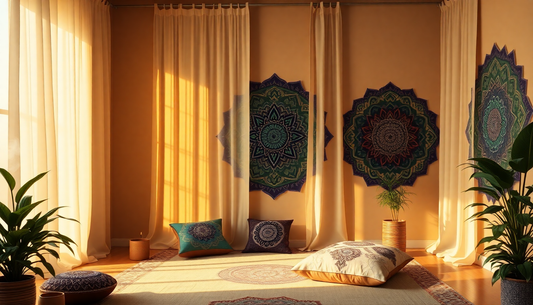
If you have a dedicated meditation or spiritual practice space, mandalas are absolutely essential. This is the perfect place to go bold with mandala designs. Consider creating a meditation altar with a mandala as the centerpiece, surrounded by candles, crystals, or other spiritual objects that resonate with you. A large mandala tapestry can serve as a beautiful backdrop for your meditation practice, providing a visual focus point for your attention.
You might also incorporate multiple mandala designs at different scales throughout your meditation space. A large mandala on the wall, a medium-sized mandala cushion for sitting, and smaller mandala artwork or objects create layers of spiritual intention. Some practitioners find that meditating with a mandala design as their focal point deepens their practice and facilitates more profound spiritual experiences.
Kitchen and Dining Areas
While kitchens and dining areas might seem like unlikely places for mandala designs, these spaces actually benefit greatly from spiritual intention. The kitchen is where nourishment is prepared, and the dining area is where families and friends gather to share meals and connection. Mandala designs in these spaces can elevate the energy of food preparation and dining experiences.
Consider incorporating mandala designs through kitchen textiles like tea towels or placemats, or through artwork on the kitchen walls. A mandala-patterned tablecloth or table runner can transform your dining experience into something more intentional and sacred. These subtle touches remind us to approach eating with mindfulness and gratitude, transforming ordinary meals into nourishing rituals.
Mandala Design Formats and Display Options
Mandalas can be incorporated into your space through numerous formats, each offering different aesthetic and practical benefits. Understanding the various options available allows you to choose the formats that best suit your style, budget, and space constraints.
Wall Art and Tapestries
Mandala wall art and tapestries are among the most popular ways to incorporate these designs into your home. Large tapestries can cover an entire wall, creating a dramatic focal point that immediately transforms a room's energy. Tapestries are particularly versatile because they can be hung on walls, draped over furniture, or even used as room dividers. They're also relatively affordable and easy to change if you want to refresh your space seasonally or as your preferences evolve.
Framed mandala artwork offers a more formal, gallery-like aesthetic. Framed pieces work well in professional spaces or in homes with more traditional décor styles. You can create a gallery wall featuring multiple framed mandalas at different scales, creating visual interest and depth. This approach allows you to tell a story through your mandala selection, perhaps choosing designs that represent different aspects of your spiritual journey or personal growth.
Canvas prints of mandala designs offer a modern, sophisticated look. Canvas prints are durable, easy to clean, and can be quite affordable, especially when purchased from online retailers. They work well in contemporary spaces and can be easily rotated or changed without damaging your walls.
Textiles and Soft Furnishings
Mandala designs on textiles bring spiritual intention into the everyday objects you interact with regularly. Mandala-patterned bedding transforms your bed into a sacred space, surrounding you with spiritual symbolism as you rest and dream. Mandala throw pillows add comfort and visual interest to sofas, chairs, and beds. A mandala throw blanket draped over your sofa or bed adds warmth, texture, and spiritual intention.
Mandala-patterned rugs define spaces while adding softness and comfort underfoot. A large mandala rug in your living room or meditation space creates a visual anchor and defines the area energetically. Smaller mandala rugs can be placed in bedrooms, bathrooms, or entryways. Mandala curtains or window treatments add a unique touch while filtering light in beautiful, patterned ways.
Decorative Objects and Accessories
Beyond wall art and textiles, mandala designs appear in numerous decorative objects that can be incorporated throughout your home. Mandala-patterned dishes and dinnerware bring spiritual intention to your dining experience. Mandala-designed vases, bowls, and decorative plates can be displayed on shelves or tables. Mandala-patterned candles not only look beautiful but also infuse your space with intentional scent and light.
Mandala-designed jewelry boxes, storage containers, and decorative boxes add spiritual touches to your bedroom or dressing area. Mandala-patterned mirrors reflect light and create the illusion of expanded space while adding spiritual symbolism. Mandala-designed clocks remind you to stay present and mindful as you move through your day. These smaller decorative objects allow you to incorporate mandala designs throughout your home in subtle, layered ways.
Lighting and Illumination
Mandala designs take on a magical quality when illuminated. Mandala-patterned lampshades cast beautiful, intricate shadows throughout your space, creating an ever-changing display of light and shadow. Mandala-designed string lights add a whimsical, spiritual touch to bedrooms, meditation spaces, or outdoor areas. Some artisans create mandala designs that are specifically meant to be backlit, creating stunning visual effects when light shines through them.
Incorporating mandala designs through lighting serves a dual purpose—it provides functional illumination while creating beautiful aesthetic effects. The interplay of light and shadow with mandala patterns creates a dynamic, living quality to the design that static wall art cannot achieve.
Creating a Cohesive Mandala-Inspired Interior Design Scheme
While incorporating individual mandala elements is wonderful, creating a cohesive design scheme that weaves mandala inspiration throughout your entire home creates a more powerful and harmonious effect. This doesn't mean every surface should feature mandalas—rather, it means thoughtfully selecting mandala elements that work together to create a unified aesthetic and energetic experience.
Establishing a Color Palette
Begin by selecting a color palette that will serve as the foundation for your mandala-inspired design scheme. This might be based on the colors that appear in your favorite mandala designs, or it might be based on the energetic qualities you want to cultivate in your home. For example, if you want to create a calming, healing environment, you might choose a palette of blues, greens, and purples. If you want to create an energizing, creative space, you might choose oranges, yellows, and reds.
Once you've established your color palette, select mandala designs that feature these colors. This creates visual coherence throughout your home, even if the mandala designs themselves are quite different. A blue mandala in your bedroom, a blue-accented mandala in your living room, and blue mandala textiles in your meditation space create a unified color story that ties your home together.
Balancing Mandala Elements with Other Décor
While mandalas are beautiful and meaningful, a home filled entirely with mandala designs can feel overwhelming or overly themed. The key is balance. For every mandala element you incorporate, include other décor pieces that complement and balance it. If you have a large mandala tapestry as a focal point in your living room, balance it with neutral furniture, natural wood elements, and plants. If you have mandala bedding, balance it with simple, solid-colored pillows and a minimalist nightstand.
This approach creates visual rest and allows your eyes and mind to process the space without becoming fatigued. It also allows the mandala designs to stand out and be appreciated rather than blending into a busy, overwhelming environment. Think of mandala designs as the spiritual and aesthetic anchors of your space, with other elements providing support and balance.
Incorporating Natural Elements
Mandalas are often inspired by nature—flowers, leaves, geometric patterns found in natural formations. Complementing your mandala designs with actual natural elements creates a harmonious, grounded aesthetic. Plants, natural wood furniture, stone accents, and natural fibers like cotton, linen, and wool all work beautifully with mandala designs.
A mandala wall hanging surrounded by potted plants creates a living, breathing aesthetic. Mandala designs on natural linen or cotton textiles feel more organic and grounded than synthetic materials. Wooden frames for mandala artwork connect the designs to nature and create warmth. These natural elements also provide practical benefits—plants improve air quality, natural materials are often more sustainable, and natural elements promote a sense of connection to the earth and natural world.
The Spiritual Practice of Living with Mandalas
Beyond the aesthetic and psychological benefits, living with mandala designs can deepen your spiritual practice and support your personal growth. Mandalas are not just decorative elements—they are tools for transformation and awakening.
Mandala Meditation Practices
One of the most powerful ways to work with mandalas is through meditation. Mandala meditation, also called yantra meditation, involves focusing your attention on a mandala design as a means of quieting the mind and accessing deeper states of consciousness. To practice mandala meditation, find a comfortable seated position in front of a mandala design. This might be a mandala artwork on your wall, a mandala tapestry, or even a mandala design on your computer or phone screen.
Begin by taking several deep breaths, allowing your body to relax and your mind to settle. Then, gently gaze at the center of the mandala, allowing your eyes to follow the patterns outward and then back to the center. Don't try to analyze or understand the design—simply allow your awareness to rest on the mandala. As thoughts arise, gently return your attention to the mandala.
Continue this